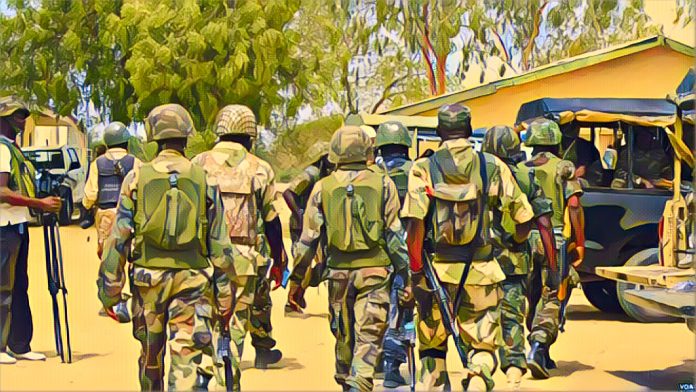
The Nigeria Labour Congress (NLC) has expressed serious concerns over the deployment of soldiers to various institutions amidst the ongoing nationwide strike. The strike, which began on June 3, demands a significant increase in the minimum wage and other worker benefits. The NLC’s warning highlights the escalating tensions between the government and labor unions.
Ayuba Wabba, President of the NLC, condemned the government’s decision to deploy military personnel to universities, hospitals, and other critical institutions. He argued that this move is an attempt to intimidate workers and undermine their right to protest.
“This deployment is a blatant act of intimidation,” Wabba said. “It is unacceptable for the government to use military force against its own people, especially when they are exercising their constitutional rights.”
The strike has paralyzed several sectors across Nigeria, with workers from various industries participating. The NLC and the Trade Union Congress (TUC) have been at the forefront of the industrial action, pushing for the minimum wage to be raised from 30,000 naira ($65) to 50,000 naira ($108) per month. They argue that the current wage is insufficient given the rising cost of living and economic challenges facing Nigerian workers.
In response to the strike, the government deployed soldiers to maintain order and prevent potential disruptions. Government officials have defended this decision, stating that it is necessary to ensure the safety and security of the institutions and the general public.
“We have deployed soldiers to ensure that vital services are not disrupted and to maintain law and order,” a government spokesperson said. “This action is in no way intended to intimidate the workers but to protect our national interests.”
However, the presence of soldiers at these institutions has been met with widespread criticism. Many view it as an excessive and heavy-handed approach that could further escalate the situation. Human rights organizations and civil society groups have also voiced their concerns, calling for the government to respect the rights of workers and engage in meaningful dialogue.
“The government’s approach is deeply troubling,” said a representative from a prominent human rights organization. “Deploying soldiers to civilian institutions sets a dangerous precedent and undermines democratic principles. We urge the government to engage with the unions and find a peaceful resolution.”
The ongoing strike and the deployment of soldiers have created a tense atmosphere in the country. Many institutions, particularly universities and hospitals, are experiencing disruptions. Students and patients have been significantly affected, with many expressing frustration over the situation.
“The strike and the deployment of soldiers have made things very difficult for us,” said a university student in Lagos. “We hope that the government and the unions can resolve this quickly so that we can return to our normal lives.”
Despite the government’s stance, the NLC remains firm in its demands. Union leaders have called for an urgent meeting with government officials to discuss their grievances and find a way forward. They emphasize that the deployment of soldiers will not deter them from fighting for the rights and welfare of Nigerian workers.
“We are ready to negotiate, but our demands must be met,” Wabba stated. “We will not be intimidated by military presence. Our fight is for justice and fairness for all Nigerian workers.”
As the strike continues, there is hope that a resolution can be reached through dialogue and negotiation. Both sides have expressed a willingness to engage in discussions, raising the possibility of a compromise that could end the industrial action and restore normalcy to the nation.
Source: Business Day