

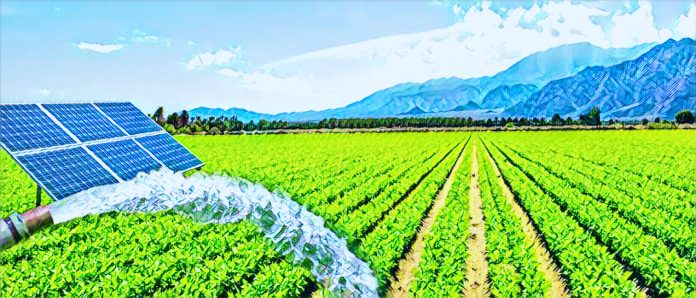
Nigeria is a country that faces many challenges in ensuring food security for its growing population. One of the major obstacles is the lack of reliable and affordable irrigation systems, especially during the dry season when rainfall is scarce and unpredictable. Irrigation can help farmers increase their productivity, diversify their crops, and reduce their vulnerability to climate shocks.
To address this challenge, the Lower Niger River Basin Development Authority (LNRBDA) has announced its plan to introduce solar-powered irrigation pumps by 2024 in its operation area. The LNRBDA is a government agency that manages water resources and provides irrigation services to farmers in nine central and northern Nigeria states. The agency currently uses irrigation pumps that run on petrol or diesel, which are costly and environmentally unfriendly.
The LNRBDA’s managing director, Dr. Adeniyi Saheed Aremu, said that the solar irrigation project aims to reduce the cost of crop production, ensure food sufficiency, and achieve a net energy gain. He said the agency has partnered with the Ministry of Water Resources to utilize the existing dams and boreholes for irrigation. He also said the agency has conducted a three-day training program for 90 staff members on institutional strengthening and capacity development.
Solar-powered irrigation is a potentially groundbreaking technology that can transform the agricultural sector in Nigeria and other African countries. According to a study by the International Food Policy Research Institute (IFPRI), solar irrigation can increase the profitable irrigated area in Nigeria by five million hectares, with more than half of the energy provided by solar systems. The study also found that solar irrigation can improve food security, reduce poverty, and mitigate greenhouse gas emissions.
However, solar irrigation faces challenges, such as high upfront costs, lack of awareness, technical skills, and maintenance services. The IFPRI study recommended that policies focus on creating an enabling environment for solar irrigation, such as providing subsidies, credit facilities, extension services, quality standards, and regulations.
The LNRBDA’s initiative is part of the Nigerian government’s and other stakeholders’ efforts to boost food security in the country. Nigeria faces a food crisis due to various factors, such as conflict, climate change, inflation, and rising food prices. According to UNICEF, nearly 25 million Nigerians are at risk of hunger between June and August 2023 if urgent action is not taken. Children are the most vulnerable to food insecurity and malnutrition, which can have long-term consequences for their health and development.
The World Food Day celebrated on October 16 every year, is an opportunity to raise awareness and action on the global hunger problem and its solutions. This year’s World Food Day theme is “Our Actions Are Our Future: Better Production, Nutrition, A Better Environment And A Better Life”. The theme highlights the need for collective action to transform the food systems and ensure healthy diets for all.
The LNRBDA’s solar irrigation project is an example of such action that can contribute to a better future for Nigeria’s farmers and consumers. The project can help increase food production, reduce environmental impact, and enhance livelihoods by harnessing the sun’s power.
Source: Tribune Online

