

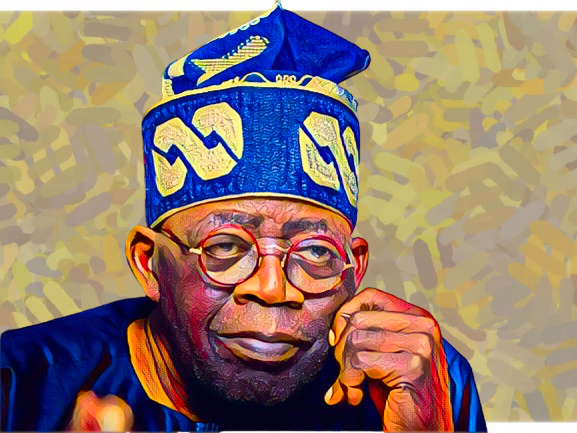
The Nigerian Council of State, an influential body comprising former presidents, heads of state, legislative leaders, and state governors, has passed a unanimous vote of confidence in President Bola Tinubu’s administration. This development comes amidst growing national tensions, including protests and unrest aimed at challenging the current government.
Confidence Vote Amidst Unrest
In a significant show of unity, the Council of State, which includes former leaders such as Generals Yakubu Gowon, Muhammadu Buhari, and Abdulsalami Abubakar, as well as former President Goodluck Jonathan, expressed their full support for Tinubu during a meeting at the Presidential Villa in Abuja. The meeting, presided over by President Tinubu, saw both in-person and virtual attendance from these prominent figures, though former Presidents Olusegun Obasanjo and Ibrahim Babangida were notably absent.
Kwara State Governor Abdulrahman Abdulrazaq, who also serves as Chairman of the Nigeria Governors’ Forum (NGF), briefed reporters after the meeting. He revealed that the Council was satisfied with the presentations made by several ministers concerning the country’s economic progress. “We had a very robust meeting,” Abdulrazaq stated. “The high note of the meeting was a unanimous passage of a vote of confidence on President Bola Ahmed Tinubu.”
The Council’s show of support comes at a critical time, as the nation faces protests that the Council described as an attempted insurrection. The recent demonstrations, which have been fueled by issues of hunger and perceived bad governance, were characterized by the Council as a movement aimed at regime change. The Council stressed that any changes in government should be achieved through democratic means, specifically the ballot box, rather than through protests or insurrections.
Ministers Defend Government’s Progress
The meeting also included detailed presentations from seven key ministers who outlined the government’s progress in various sectors, particularly in economic diversification. The Minister of Solid Mineral Development, Dr. Dele Alake, emphasized that the Council praised Tinubu for his efforts in resisting a forceful takeover of the government. He noted that the National Security Adviser, Mallam Nuhu Ribadu, briefed the Council on the security situation, particularly in relation to the recent protests.
Alake clarified that the Council viewed the #EndBadGovernance protests not just as public demonstrations but as a movement with the potential to destabilize the government. “The Council of State thought that nobody should be allowed to truncate the hard-earned democracy,” Alake said. He reiterated that any regime change must come through electoral processes and not through unconstitutional means.
During the meeting, the ministers reported significant progress in their respective sectors. The presentations were well-received, with feedback indicating satisfaction among the Council members. The discussions covered a range of issues, from economic policies to security concerns, with the ministers highlighting both achievements and challenges.
Economic Outlook and Future Prospects
The Minister of Finance, Wale Edun, also provided an update on the state of the economy, presenting data that showed positive trends in key economic indicators. He highlighted growth in the economy, a stabilizing exchange rate, and a surplus in the balance of payments. Despite high inflation, Edun noted that it is beginning to slow, and there are encouraging signs for the future.
Edun emphasized the government’s focus on economic diversification, pointing out opportunities in non-oil exports and the service sector. He expressed optimism about the prospects for growth and investment, particularly in infrastructure and foreign direct investment.
In conclusion, the Council of State’s backing of President Tinubu signals a strong endorsement of his administration amidst challenging times. The discussions held during the meeting reflected a commitment to maintaining Nigeria’s democracy and ensuring that any governmental changes occur through lawful and democratic means. As the country navigates its current challenges, the Council’s support could prove pivotal in stabilizing the nation’s political landscape.
Source: Vanguard

