

KEY POINTS
-
Bode George insisted that recent defections from the PDP to the APC, including major Delta State figures, are not a fatal blow to the party.
-
He described the mass defections as temporary political shifts common in Nigeria’s dynamic political landscape.
-
George reaffirmed the PDP’s resilience, stating that the party has survived similar challenges before and will emerge stronger ahead of the 2027 elections.
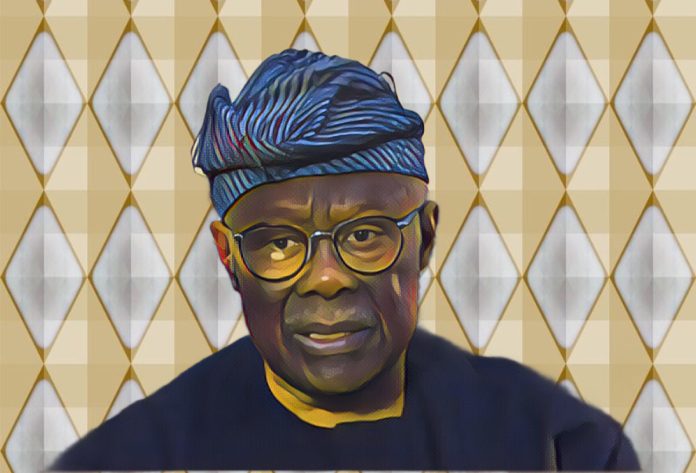
Amid growing concerns following the mass defection of top Peoples Democratic Party (PDP) figures in Delta State, including Governor Sheriff Oborevwori and former Governor Ifeanyi Okowa, party elder statesman Chief Bode George has moved to downplay the potential fallout, asserting that such movements are a routine feature of Nigeria’s political life.
Speaking during an interview with Channels Television’s, George brushed aside suggestions that the defections signal the imminent collapse of the PDP, insisting the opposition party remains firmly rooted among the people.
“The fact that these guys moved en masse… the people of Delta are waiting. What impact has the APC had on the people? There is anger in the land. What do you think they are going to do there, if not for personal embellishment?” he asked pointedly.
The recent defections to the All Progressives Congress (APC) were seen as a major political blow to the PDP ahead of the 2027 elections, especially given the stature of figures involved, including former Vice-Presidential candidate Okowa and ex-Governor James Ibori. However, George maintained that defections, even when seemingly dramatic, rarely have a lasting impact.
Former PDP deputy national chairman says mass defections to APC will not derail the party’s future
Reflecting on historical patterns, George noted that the PDP has weathered similar storms before, citing past instances where influential members left, only to later return.
“We’ve seen it before—those who trooped out eventually came back, because they’re heading into an organisation that is so personally owned,” he said, describing the APC as a party dominated by individual ambitions rather than collective vision.
George also emphasized the unpredictable nature of Nigeria’s political arena, arguing that those defecting would encounter internal resistance within the APC. “Those already in APC—do you think they’ll fold their arms and say ‘welcome’? They have their ambitions too. You can’t just waltz in and take over,” he remarked.
Addressing concerns about PDP governors publicly endorsing President Bola Tinubu, George reiterated that these developments are not catastrophic but rather part of the political ebb and flow.
“Politics is not rigid; it’s dynamic. Just because something happens doesn’t mean it is final,” he explained. “It is not a threat. It is merely transitional.”
He was particularly critical of Okowa’s perceived political inconsistencies, referencing the 2021 Asaba Declaration where southern governors—including Okowa—advocated for a southern presidency. George described Okowa’s later acceptance of a northern presidential candidate as “foolish,” suggesting it contributed to disillusionment within the PDP ranks.
Despite the upheaval, George expressed confidence in the PDP’s future, promising that the party would bounce back stronger. “These movements don’t scare us,” he concluded. “We’ve been here before—and we know how it ends.”
Political analysts suggest that while George’s optimism is emblematic of veteran resilience, the PDP must urgently embark on rebuilding efforts, strengthening internal democracy, and reconnecting with grassroots supporters if it hopes to regain national dominance.
Meanwhile, the APC appears eager to consolidate its gains in the South-South region, long considered a PDP stronghold, with strategic moves aimed at expanding its base ahead of 2027.
As political realignments continue to unfold, many observers agree that the next two years will be critical for Nigeria’s democracy, with shifting alliances, regional calculations, and voter sentiment playing decisive roles.

