

KEY POINTS
- National Minimum Standards compliance deadline set for states.
- Enforcement will begin after the one-year compliance window.
- States must upgrade teachers, facilities and curriculum for compliance.
The National Senior Secondary Education Commission has given state governments one year to meet the newly established benchmarks for senior secondary schools across Nigeria.
The ultimatum follows the rollout of nationwide standards designed to overhaul teaching quality, infrastructure and school governance.
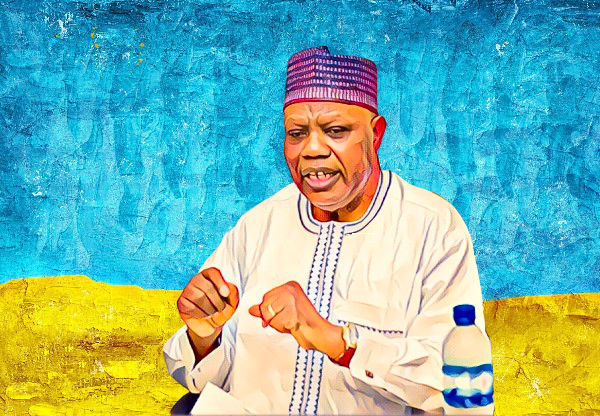
Speaking in Abuja, Executive Secretary Iyela Ajayi said the Commission had moved past “building frameworks” and was now shifting into strict enforcement. He credited Ministers Maruf Alausa and Suwaiba Ahmad for backing efforts to unify expectations across all senior secondary schools.
Ajayi said the February launch of the National Minimum Standards marked a structural turning point. The guidelines outline teacher qualifications, staffing ratios, classroom conditions and the quality of buildings required to deliver credible learning. Copies have been distributed to all states, with a 12-month countdown now underway.
States must upgrade schools to meet National Minimum standards compliance
Ajayi said NSSEC will begin nationwide enforcement inspections once the deadline expires. “There must be standards and uniformity,” he said. “We cannot continue with students learning under trees or in classrooms without roofs.”
He added that boosting teacher quality remains central to the plan. The Commission is rolling out professional development for English and Mathematics teachers, alongside AI-driven training for educators and school administrators.
Ajayi also highlighted NSSEC’s role in recent curriculum reforms, including the return of History, the reduction of curriculum overload and the expansion of skill-based learning. Despite limited funds, the Commission has supported upgrades in 50 schools one per state through constituency projects involving new classrooms, laboratories and ICT facilities.
Furthermore, the Commission is negotiating with telecom providers for subsidized broadband and working with development partners to deliver 30,000 tablets to teachers. Plans are underway to make computer literacy compulsory and introduce robotics, AI and data science programs.
Ajayi also warned that ambitions remain constrained by the absence of legally mandated funding. Although the law requires 2 percent of the Consolidated Revenue Fund for NSSEC interventions, “not a kobo has been released,” he said.

