

KEY POINTS
- The European Union formally partnered with Nigeria’s 3MTT Programme at a high-level Lagos event last week.
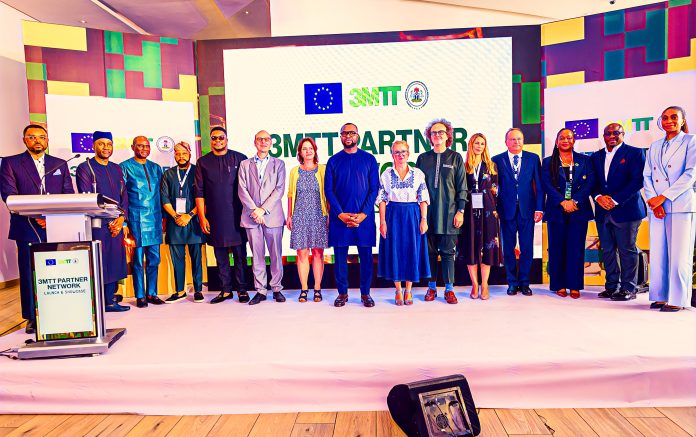
- The 3MTT Partner Network launched at the same event, connecting tech companies, training providers and employers to programme fellows.
- Fellows at the event shared impact stories showing how 3MTT has shifted their skills, confidence and career prospects.
Nigeria’s digital skills drive picked up serious institutional weight last week when the European Union stepped in as a formal partner of the 3 Million Technical Talent Programme, better known as 3MTT.
The announcement came at a high-profile Lagos event that also served as the official launch of the 3MTT Partner Network, an ecosystem built to move Nigerian tech talent from the classroom to the job market. Government officials, development institutions and private sector stakeholders filled the room, signalling that this was not a ceremonial handshake.
Minister of Communications, Innovation and Digital Economy Bosun Tijani addressed the gathering and kept his message practical. The programme, he said, has already started opening doors for thousands of Nigerians, but hitting the scale the country needs demands something the government alone cannot deliver: real collaboration across sectors.
What the EU brings to the table
The EU’s entry into the 3MTT ecosystem is expected to support capacity building, widen access to digital training and strengthen the pipeline from learning to employment for programme fellows. It also fits into a broader European commitment to inclusive digital transformation across Nigeria, one that goes beyond funding announcements toward structural engagement.
The partnership lands at a moment when Nigeria is trying to establish itself as a serious player in the global digital economy, not just a large market, but a producer of competitive technical talent.
The partner network and the people behind the numbers
The 3MTT Partner Network launched alongside the EU announcement, pulling together technology companies, training providers and employers under a single framework aimed at creating sustainable outcomes for fellows. Programme leads described the network as the link between training and earning, connecting participants to internships, job placements and real-world projects rather than leaving them with certificates and no clear next step.
The most striking moments of the event came from the fellows themselves. Selected participants took the stage to describe what 3MTT had done for their careers and confidence. Their accounts gave the initiative something policy documents rarely manage: a human face.
Stakeholders left the event focused on what comes next: deepening impact, scaling partnerships and keeping Nigerian talent sharp enough to compete globally.

