

Key points
-
Illegal mining sites in Plateau become targets for bandit attacks and violent clashes.
-
Mine collapses and unsafe pits kill several artisanal miners in rural communities.
-
Economic hardship pushes many youths to ignore government bans and continue mining.
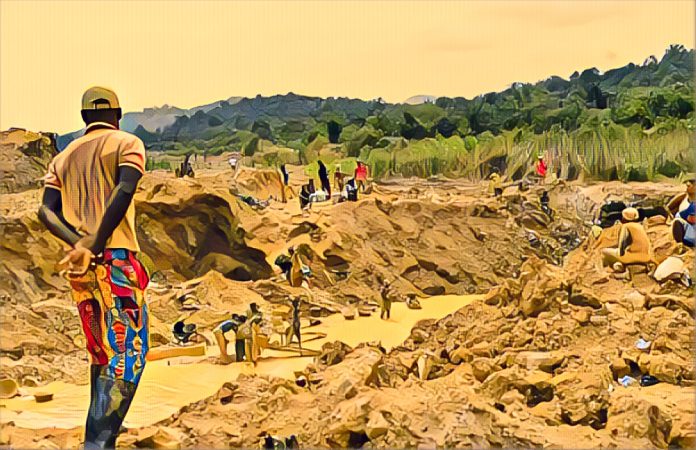
Mining activity that once promised economic benefits has turned into a source of grief for many rural communities in Plateau State, where illegal operations increasingly expose residents to violence, accidents and environmental hazards.
Plateau is one of Nigeria’s most mineral-rich states, with deposits of tin, columbite, kaolin, granite, marble, gypsum, quartz, barite, lead, zinc, iron ore and several gemstones scattered across different communities.
While these resources have long attracted miners, many of the activities now taking place are unregulated and often carried out at night to evade government restrictions.
Illegal mining has become common in communities across Bassa, Jos South, Barkin Ladi, Riyom, Bokkos, Mangu and Wase local government areas, where many youths depend on the activity for survival.
Mining sites become hotspots for violence
Several of these mining locations have turned into dangerous zones as armed groups increasingly target them.
On Jan. 22, 2026, suspected bandits attacked an illegal mining site in the Capitex area of Kuru community in Jos South Local Government Area around 1 a.m., killing seven young miners.
No arrests have been made, and the identities of the attackers remain unknown.
Just weeks earlier, on Dec. 16, 2025, gunmen stormed a mining site in the Ratoso Fan community in Barkin Ladi Local Government Area, killing at least 12 miners and injuring several others. Three people were also abducted while the attackers fled with mined minerals.
Communities in Wase and Bokkos local government areas have reported similar incidents in recent months, often carried out under the cover of darkness when security patrols are limited.
Deadly mine collapses add to toll
Beyond attacks by armed groups, the fragile nature of many artisanal mining pits poses another serious risk.
In September 2025, at least four illegal miners died when a mining pit collapsed in Dura community in Jos South Local Government Area. Several others were trapped before being rescued.
Witnesses said the miners had returned to the site at night after ignoring warnings from authorities.
A similar incident occurred in November 2024 in Bassa Local Government Area, where 13 miners, mostly aged between 18 and 30, died after an artisanal mining site caved in.
Experts say many of these accidents occur because miners rely on crude tools and ignore safety measures.
Dr. Kehinde Ogunmola, a geology lecturer at the University of Jos, said unstable soil and heavy rainfall often trigger sudden collapses at poorly managed sites.
“Many mining sites have loose or weathered soil that can collapse easily. When rain softens the ground around pits, the risk increases significantly,” he said.
Economic hardship drives illegal mining
Despite the dangers and government warnings, many young people continue to engage in the activity.
Mancha Yaro, an 18-year-old miner from Jos South, said illegal mining remains one of the few ways many youths can earn a living.
“We know it is dangerous, especially at night, but we need to survive and support our families,” he said.
Yaro said he has worked in the mines for three years without formal training or education.
High unemployment and poverty have pushed many young people in rural communities into the risky trade, often at the expense of their education.
Government moves to curb illegal mining
The Plateau State government has repeatedly condemned illegal mining and introduced measures to regulate the sector.
In February 2025, Gov. Caleb Mutfwang signed Executive Order 001 suspending all mining activities in the state, both legal and illegal, pending a review.
The government later set up a Technical Committee on Artisanal Mining to gather data and assess operations across the state.
By May 2025, authorities granted approval for about 159 mining companies to resume operations after meeting regulatory requirements, while the ban remained in place for unapproved operators.
Security agencies step up warnings
Security agencies say the ban on illegal mining remains in force.
Maj. Gen. Folusho Oyinlola, General Officer Commanding the 3rd Division of the Nigerian Army, recently warned that those involved in illegal mining could face prosecution.
He also raised concerns about rising insecurity in parts of Plateau, including attacks on mining sites and tensions between farmers and herders.
Oyinlola urged community leaders to strengthen dialogue and early warning systems to prevent violence.
State Commissioner for Information and Communication Joyce Ramnap said the government is taking steps to address the problem and protect lives and property.
Despite these efforts, illegal mining continues in many rural areas, leaving communities caught between economic survival and growing insecurity.

