

KEY POINTS
- The Central Bank of Nigeria and the Nigerian Communications Commission have signed a memorandum of understanding to tackle SIM-related fraud and strengthen consumer protection across Nigeria’s digital economy.
- CBN governor Olayemi Cardoso and NCC executive vice chairman Aminu Maida announced the rollout of a Telecom Identity Risk Management Portal for real-time verification of mobile numbers.
- The agreement sets up two joint committees, tightens fraud response coordination, and follows earlier regulator work on failed transactions and USSD pricing.
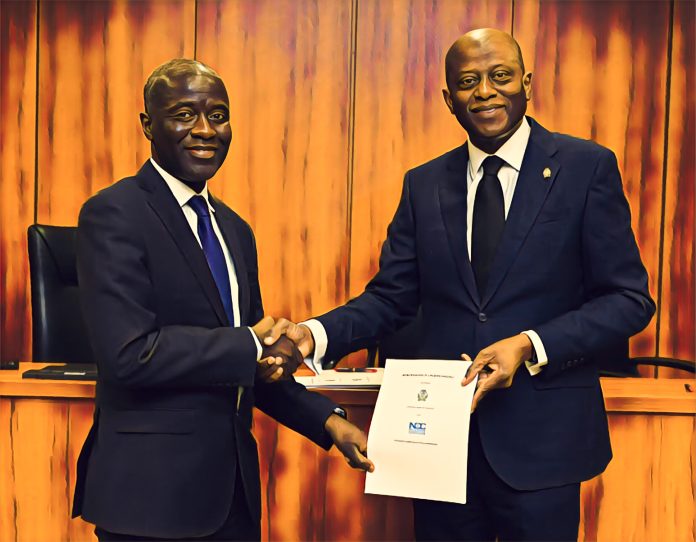
Nigeria’s two biggest regulatory players in the digital economy are teaming up against SIM-linked fraud. Olayemi Cardoso, the governor of the Central Bank of Nigeria, and Aminu Maida, executive vice chairman of the Nigerian Communications Commission, signed a memorandum of understanding in Abuja on Monday to tighten coordination on electronic fraud, payment integrity and consumer protection.
The signing happened at the CBN headquarters. Cardoso called the pact “a practical statement of national interest,” arguing that rising reliance on digital channels for payments and financial services demands closer collaboration between the financial and telecom regulators.
A centerpiece of the deal is the rollout of a Telecom Identity Risk Management Portal, a data-sharing platform that lets banks and fintech firms flag recycled, swapped or blacklisted mobile numbers in real time. Cardoso said strict data-protection rules, including encryption and consent protocols, will govern access.
Regulators lean on shared intelligence
Beyond the portal, the MoU strengthens coordination on approvals, technical standards and innovation trials, including sandbox testing. Cardoso said the move sharpens the tools both regulators need to chase down electronic fraud, which continues to batter Nigerian consumers as mobile payments expand.
“Addressing these threats requires joined-up action, shared intelligence, clearer escalation paths, stronger operational readiness across regulated entities, and consistent public education,” Cardoso said.
On the NCC side, Maida, the executive vice chairman, framed the signing as a milestone for digital-economy oversight and said collaboration between the two institutions is “not optional; it is imperative.” He added that the portal will give banks better visibility into SIM-swap activity, number recycling and fraud flags on mobile lines.
Two joint committees take the lead
Two committees will now carry the work forward. The Joint Committee on Payment Systems and Consumer Protection will oversee broad coordination, while a separate Joint Committee on the telecom risk management platform will focus specifically on the portal and related tools.
Rakiya Yusuf, director of payment system supervision at the CBN, traced the collaboration back to earlier work between the two regulators, including a 2018 MoU that opened mobile-money services to telecom operators. More recent wins, she said, include the resolution of the USSD pricing dispute, the N6.98 per-session fee and a proposed 30-second refund framework for failed transactions.
Regulators expect the new pact to cut fraud losses, deepen digital financial inclusion and speed up complaint resolution on issues like failed airtime recharges. Whether it lives up to that billing will come down to how fast the portal, and the committees behind it, actually launch.

