

KEY POINTS
- Ma’aji says patriotism drove the alleged coup plan.
- He cited hardship, governance and military welfare concerns.
- He says the alleged plot had not reached execution stage.
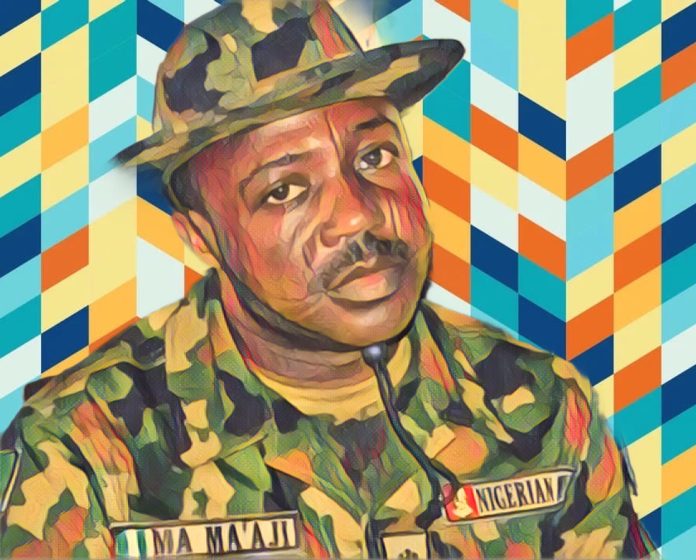
Army Colonel Mohammed Ma’aji, who has been accused of taking part in an alleged plan to remove President Bola Tinubu’s government, has said his actions were driven by what he described as patriotism and concern about Nigeria’s worsening condition.
Ma’aji said he was not motivated by personal ambition or the desire to gain political power. According to him, economic hardship, poor governance and concerns about the welfare of Nigerians and military personnel influenced his decision to consider the alleged plan.
The colonel also said his personal struggles and concerns about the conditions of soldiers contributed to his growing frustration with the direction of the country.
Ma’aji said his concerns about Nigeria had developed over a long period and were connected to what he described as a gradual decline in the country’s economic and social conditions.
He said he loved Nigeria and his military career but became increasingly worried about the challenges facing ordinary citizens.
The colonel pointed to rising economic hardship and what he described as poor governance, saying he feared the country could reach a point where its problems would become difficult to reverse.
He also referred to his own difficulty in providing for his five children on his salary, saying the experience made him question the wider economic situation in the country.
He said access to quality education had also become difficult for many families, including military personnel.
Welfare of soldiers raised concerns
Ma’aji said he was particularly concerned about the welfare of members of the armed forces.
He raised concerns about soldiers who had suffered injuries during combat and alleged that some wounded personnel at the 44 Nigerian Army Reference Hospital in Kaduna were not receiving adequate care.
According to him, the challenges faced by wounded soldiers reflected wider problems within the military and contributed to his belief that urgent changes were needed.
He said his concerns were not limited to his personal circumstances but were linked to what he saw as broader problems affecting the country and the armed forces.
Ma’aji said the alleged plan to overthrow the government had not reached the stage of execution before his arrest.
According to him, the group was still trying to identify and mobilise officers who shared similar concerns about the country.
He said more meetings were expected to take place and that the group had not been fully formed when the arrests occurred.
Ma’aji also said there was no fixed date for the alleged operation because the group was still waiting for more personnel and resources. He denied that there was any foreign involvement in the alleged plan.
Ma’aji said he personally funded much of the activities linked to the alleged plan.
He also claimed that former Minister of State for Petroleum Resources, Timipre Sylva, contributed about N400 million.
However, Ma’aji denied contacting some senior military officers whom reports had linked to the alleged plot.
He said dissatisfaction within parts of the military, as well as his own unsuccessful promotion attempts, contributed to the revival of the movement.
Ma’aji has called for the creation of a formal system through which military officers can raise concerns with the Chief of Army Staff without fear of punishment or victimisation.
He said better salaries, improved welfare packages, stronger pension benefits and better educational opportunities should be provided for military personnel.
He also called for stronger measures to tackle corruption in Nigeria and within the armed forces.
According to him, improving the welfare and working conditions of soldiers could help address some of the frustrations affecting personnel.

