

KEY POINTS
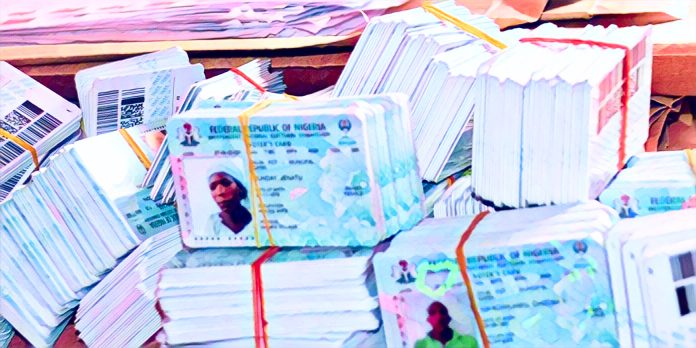
- An estimated 14 million voter cards remain uncollected across Nigeria.
- INEC registered more than 10.7 million new voters in its latest drive.
- Borno, Bauchi, Kebbi and Delta officials have not released figures.
Nigeria’s electoral commission is struggling to get an estimated 14 million uncollected PVCs into voters’ hands, three weeks after distribution began nationwide, Vanguard reported.
Without their permanent voter cards, many registrants could miss out on the 2027 elections, which open with presidential and National Assembly polls on Jan. 16.
The Independent National Electoral Commission, or INEC, added 10,772,421 new voters in its last continuous voter registration drive, according to the newspaper. Still, many states have yet to release tallies of uncollected cards. Before the 2023 general elections, 6.26 million cards went unclaimed.
Uncollected PVCs pile up across states
Plateau has about 95,000 unclaimed cards from earlier registration exercises, even as it added 121,821 new voters. Meanwhile, Bayelsa has 52,225 cards from the first phase of the latest drive awaiting collection, and Jigawa has 33,079 ready for pickup.
In Taraba, 29,314 cards remain uncollected. Of the 31,676 cards produced there in the 2025-2026 exercise, voters had picked up only 16,188, or about 51%, Resident Electoral Commissioner Sa’ad Umar Idris said. So he urged political parties, traditional and religious leaders and civil society groups to mobilize residents.
Benue offered a brighter picture, with 58,581 cards collected during the Oct. 9-15 display of the voter register. In Kaduna, voters had collected 61,494 cards by Oct. 28, with women outpacing men.
Voter rolls grow, but data gaps remain
However, registration numbers keep climbing. Sokoto now has 2,633,113 registered voters, including 461,057 new ones. Jigawa added 515,878, Ogun 348,703, Zamfara 313,115 and Yobe 283,525.
Lagos remains the largest voter base with 7,488,633 registered voters, followed by Kano with 6,570,276. But Lagos says its final register won’t be ready until Dec. 15, when the claims and objections period closes.
Elsewhere, the picture is incomplete. Kano is still compiling collection figures across its 44 local government areas. INEC officials in Borno described the data as sensitive, Bauchi officials said it wasn’t meant for the public, and efforts to get figures from Kebbi failed. Delta officials also declined to release numbers.
Still, the gap between registration and collection will matter on election day. Whether rising voter numbers translate into actual participation, the newspaper noted, depends largely on how well INEC’s collection and mobilization campaigns work.