

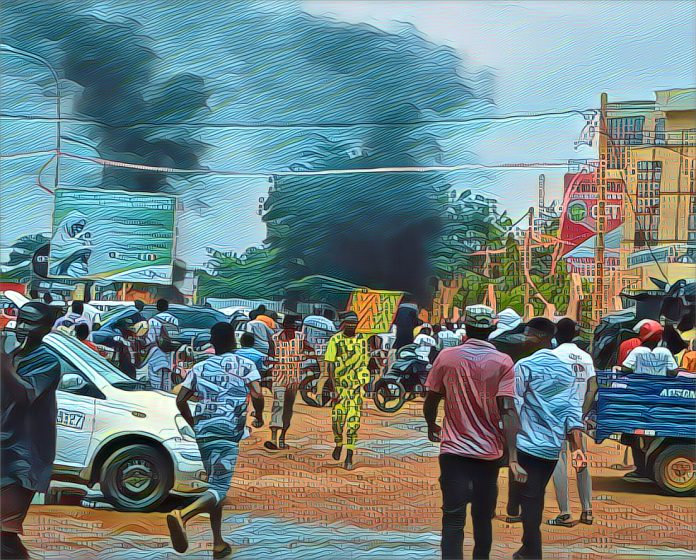
Communities positioned along the Nigeria-Niger boundary are grappling with heightened uncertainty due to the ripple effects of the recent coup in Niger. With a locked border and essential services interrupted, residents confront mounting hardships.
Vanguard reported that these Nigerian communities have witnessed a complete cessation of food, water, and power supplies for weeks. The free flow of goods and services once bridged the gap between the two nations has hit a wall since the political upheaval struck Niger.
In a conversation with Arewa Voice, Sani Abubakar, the interim Village Head of the Magama Community located in the Jibia Local Government Area of Katsina State, delves deep into the multifaceted repercussions this crisis has unfurled on the border regions.
Abubakar vividly depicts the community’s daily struggle, emphasizing the skyrocketing prices and scarcity of vital goods typically imported from Niger. Essential commodities like rice and spaghetti, once easily accessible to the average family, have now become luxury items.
“The cost of a rice bag, previously pegged at N31,000, has surged to a staggering N45,000,” says Abubakar. Beyond the price inflation, even procuring these essentials has become an uphill battle due to limited availability.
Yet, amidst this escalating economic pressure, the border communities have remarkably steered clear of widespread civil unrest or violence.
However, the ramifications of the crisis aren’t solely economic. Abubakar sheds light on the deteriorating trade dynamics that once buoyed the relationship between these border communities. The bustling Magama Market in Jibia, once a hub of trans-border commerce, now stands in unsettling silence.
The once-familiar sight of Nigerien traders is now a rarity. Conversely, Nigerians aiming to cross the border for trade often face undue harassment and exorbitant penalties, especially motorcyclists.
With formal avenues constricted, many have turned to unauthorized paths, further heightening living costs and pushing communities toward potential famine.
These sentiments resonate with other local inhabitants who nostalgically recall the deep-rooted camaraderie between Nigeria and Niger’s border towns before the political upheaval.
Ambassador Gidado Suleiman Farfaru, the Magajin Zandam, reflecting on this erstwhile bond, says, “Our border communities, historically, have been more than just neighbours. They’ve been akin to extended families, sharing deep-rooted ties.”
In conclusion, as the geopolitical scenario evolves, these border communities, bound by shared histories and economies, can only hope for an early resolution, restoring their lifelines and mending the socio-economic fabric currently at risk.

