

Key Points
- Peter Obi condemned the Angwan Rukuba Palm Sunday attack, warning that Nigeria is becoming desensitized to recurring mass killings of its citizens.
- Obi called the absence of a sustained government security strategy “unacceptable,” demanding that the safety of Nigerian lives become non-negotiable.
- His reaction came as hundreds of residents defied a 48-hour curfew to protest in the streets of Angwan Rukuba on Monday morning, with the Christian Association of Nigeria also issuing a formal condemnation.
Peter Obi was returning from Kano on Sunday night when the news came through. Images. Reports. The familiar, devastating shape of another mass killing in Plateau State.
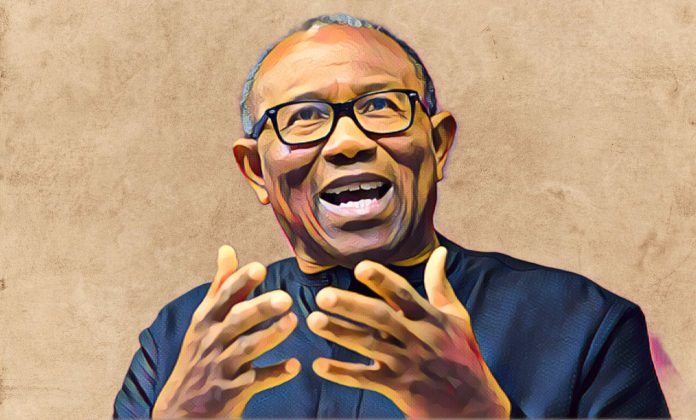
The former presidential candidate did not wait long to speak. Taking to his official X account after gunmen stormed the Gari Ya Waye community in Angwan Rukuba, Jos North, killing at least 26 people on Palm Sunday, March 29, Obi said what many Nigerians were feeling but struggling to put into words.
“These continuous devastating headlines are a reminder of a nation that is steadily normalising the loss of its own people,” he wrote.
It is the kind of line that lands hard because it is hard to argue with.
Grief with an edge
Obi’s statement was not simply a condolence. It was a reckoning. He expressed grief for the families who lost loved ones, called the recurring attacks unacceptable, and said clearly that no nation worthy of the name treats tragedy as routine.
“It is unacceptable that these attacks happen with such frequency, and even more unacceptable that there seems to be no decisive, sustained strategy to end them,” he said. “No nation or leader normalises tragedy.”
He closed with a call to action that carried the weight of someone who has watched this pattern play out too many times. “The safety of Nigerian lives must become non-negotiable. We cannot continue to mourn what should have been prevented. Enough is enough.”
A community in open defiance
The grief in Jos was not quiet on Monday. Hundreds of angry residents took to the streets, defying the state-imposed 48-hour curfew to protest the killings and demand urgent action from authorities.
They gathered at the site of the attack, many of them exhausted and furious, some holding placards, others just standing in the road where their neighbors had been shot the night before.
One protester said the curfew was not a solution: “People are outside because of the attack that happened yesterday. They chased the security men because they are not doing any help right here.”
The Christian Association of Nigeria also weighed in Monday, with CAN President Archbishop Daniel Okoh calling the violence “heart-wrenching,” especially on Palm Sunday, a day meant for peace and reflection.
“Instead, it descended into a day of bloodshed, where innocent Nigerians were ruthlessly hunted and killed. This is not merely tragic; it is entirely unacceptable,” Okoh said.
The pattern behind the pain
What makes Obi’s statement resonate is the context it sits in. Plateau State has buried its dead in cycles for years.
The Middle Belt has seen intercommunal violence, farmer-herder clashes and targeted killings with a frequency that has dulled the national response to a predictable rhythm: shock, condemnation, curfew, quiet.
The University of Jos suspended all examinations scheduled for March 30 and March 31, citing the tensions in and around Angwan Rukuba, a neighborhood that houses many of its students and staff.
The university’s response was practical. Obi’s was moral. Both pointed to the same uncomfortable truth: life in Jos this week had to stop and reorganize itself around another massacre.
“My heart goes out to the families who have lost loved ones,” Obi wrote. “I pray that we get a country where the loss of lives is no longer a recurring reality.”
That prayer has been said before in Nigeria. The question the country keeps failing to answer is who, exactly, is listening.

