

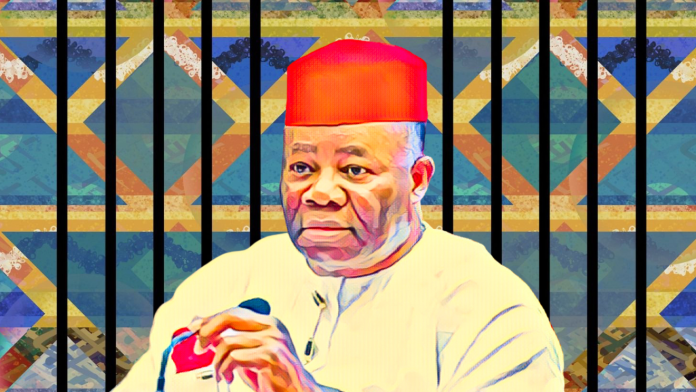
KEY POINTS
- Akpabio defended INEC chairman Joash Amupitan, dismissing claims of partisan bias over a resurfaced tweet.
- He clarified that the “victory is sure” post was made before Amupitan assumed office and did not reference any political party.
- INEC has rejected the allegations, describing them as false and part of a misinformation campaign.
Senate President Godswill Akpabio has defended the chairman of the Independent National Electoral Commission (INEC), Joash Amupitan, amid allegations of partisan bias linked to a controversial social media post.
The controversy emerged after online claims suggested that Amupitan operated a personal account on X and used it to engage with or endorse a politically charged message.
Speaking during the inauguration of the corporate headquarters of the National Revenue Service (NRS) in Abuja, Akpabio dismissed the allegations, insisting that the post in question did not indicate support for any political party.
Akpabio Dismisses Allegations of Political Bias
Akpabio further clarified that the controversial post was made before Amupitan assumed office as INEC chairman, at a time when he was still working as a lecturer.
He added that even if the post were authentic, it reflected a personal opinion expressed prior to holding public office, stressing that individuals are entitled to political preferences before taking up official roles.
The Senate President also noted claims by Amupitan that the post may have been manipulated, though he maintained that the timing of the message remained key.
He emphasised that public officials are expected to maintain neutrality once they assume office, adding that Amupitan has since demonstrated that level of responsibility.
The controversy stems from a 2023 post originally shared by Dayo Israel, which resurfaced online and was linked to an account allegedly associated with Amupitan that responded with “Victory is sure.”
However, INEC has consistently denied any connection between its chairman and the account, describing the claims as false and part of a coordinated misinformation effort aimed at undermining public trust in the electoral body.

, Joash Amupitan)